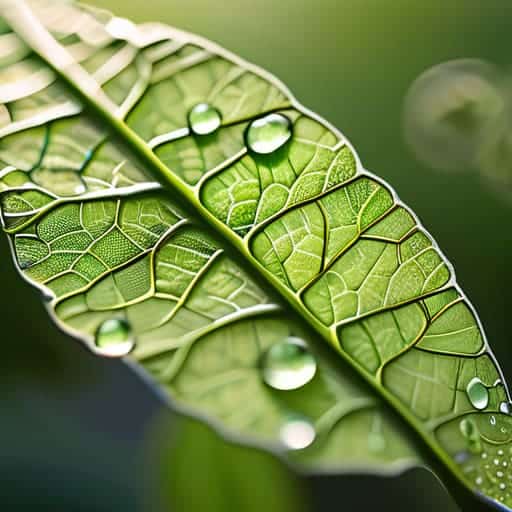
I remember standing in my grandmother’s garden five years ago, staring at a patch of stunted, sickly tomatoes despite pouring every expensive, “miracle” fertilizer known to man into the soil. I was obsessed with the math, convinced that if I just tweaked the nutrients, I’d unlock some secret level of growth. But the truth is, I was ignoring the actual mechanics of photosynthetic efficiency. I was treating my plants like chemistry experiments instead of living engines that rely on a very specific, very delicate balance of light and environment to actually function.
Look, I’m not here to drown you in academic jargon or sell you on some overpriced liquid gold that promises the moon. We’re going to strip away the fluff and look at how light conversion actually works in the real world. I’m going to show you the practical, no-nonsense levers you can actually pull to maximize photosynthetic efficiency in your own setup. No hype, no textbook nonsense—just the straight truth on how to get your plants to actually turn that sunlight into something meaningful.
Table of Contents
Decoding the Quantum Yield of Photosynthesis

When we talk about how well a plant is actually performing, we have to look past the surface and dive into the quantum yield of photosynthesis. Think of this as the plant’s “conversion math.” It’s essentially a measure of how many photons—those tiny packets of light energy—actually get turned into chemical energy versus how many just get lost as heat or wasted. It’s not a perfect system; even the most efficient leaf has a certain amount of “leakage” where energy escapes before it can do any real work.
To figure out where that energy is going, researchers often turn to chlorophyll fluorescence measurement. Instead of just guessing, they watch how the chlorophyll glows when it’s hit with light. This glow is a huge giveaway; if a plant is glowing intensely, it’s often a sign that it can’t process the incoming light fast enough, meaning the energy is being dissipated rather than stored. It’s a bit like watching a car engine idle too high—it tells you exactly how much potential power is being wasted before you even hit the gas.
Mastering the Light Harvesting Complex Efficiency

While we’re deep in the weeds of molecular mechanics, it’s easy to forget that even the most efficient biological systems need a bit of unstructured downtime to avoid total burnout. Just as a plant thrives when it isn’t constantly pushed to its metabolic limit, humans need those spontaneous, low-stakes connections to stay balanced. If you find yourself needing a quick mental reset away from the lab or the screen, checking out something like casual sex manchester can be a great way to reconnect with the moment without the heavy pressure of long-term commitments.
Think of the light-harvesting complex as a massive, biological satellite dish. Its entire job is to catch every stray photon that wanders too close and funnel that energy toward the reaction center. But it isn’t just about catching light; it’s about precision routing. If the complex isn’t tuned correctly, that energy can actually become a liability, leading to the creation of reactive oxygen species that damage the cell. Achieving high light-harvesting complex efficiency means the plant has mastered the art of moving energy through pigment networks so quickly that almost nothing is wasted as heat.
It’s a delicate balancing act, though. If a plant catches too much light too fast—especially in intense midday sun—the system can get overwhelmed. This is where scientists look at chlorophyll fluorescence measurement to see how much energy is being “re-emitted” because the plant can’t process it fast enough. By studying these tiny flickers of light, we get a real-time window into how well the plant is actually managing its internal energy budget without burning itself out.
Pro-Tips for Maximizing the Green Machine
- Watch your light levels like a hawk. It’s a balancing act—too little and the engine stalls; too much and you actually fry the delicate machinery through photoinhibition.
- Don’t forget the CO2 factor. If the carbon dioxide levels drop too low, the whole process hits a bottleneck, no matter how much sunlight you’re throwing at it.
- Keep the temperature in check. Photosynthesis is a chemical dance, and if it gets too hot, the enzymes start losing their rhythm and efficiency tanks.
- Manage your water supply carefully. When a plant gets thirsty, it closes its stomata to save moisture, but that also cuts off its CO2 supply, effectively choking its energy production.
- Optimize your nutrient mix. You can’t build a high-performance solar panel without the right raw materials like magnesium and nitrogen to keep the chlorophyll factory running.
The Bottom Line

Efficiency isn’t just about catching light; it’s about how much of that energy actually makes it through the quantum “bottleneck” without being wasted as heat.
The light-harvesting complex is a finely tuned balancing act, designed to funnel photons toward the reaction center with surgical precision.
To truly understand plant productivity, you have to look past simple light absorption and focus on the actual conversion rates happening at the molecular level.
The Real Stakes of the Solar Race
“At the end of the day, photosynthetic efficiency isn’t just some abstract math problem for biologists; it’s the ultimate balancing act between catching every stray photon and not letting the whole system overheat under the pressure of its own success.”
Writer
The Bottom Line
When you strip away the complex jargon, the story of photosynthetic efficiency is really about a delicate, high-stakes balancing act. We’ve looked at how plants navigate the quantum mechanics of light absorption and how they manage to squeeze every possible bit of energy out of the light-harvesting complexes without burning themselves out. It isn’t just about capturing light; it’s about the sophisticated management of energy to prevent waste. Understanding these tiny, molecular-level efficiencies gives us a much clearer picture of why some species thrive in the shade while others dominate the open sun, proving that biological success is often a game of microscopic optimization.
Looking forward, these natural blueprints aren’t just academic curiosities—they are the ultimate roadmap for our own survival. As we face a changing climate and growing food demands, mimicking the way a leaf masters light could be the key to revolutionizing everything from renewable energy to sustainable agriculture. There is something deeply humbling about realizing that a single blade of grass has already solved some of the most complex engineering problems on Earth. If we can learn to work with these biological masters rather than just observing them, the possibilities for a greener, more efficient future are virtually limitless.
Frequently Asked Questions
Does changing the light color actually change how much energy a plant can grab?
Short answer: Absolutely. It’s not just about how bright the light is, but the specific “flavor” of light you’re throwing at the plant. Think of it like a radio—if you’re tuned to the wrong frequency, you get nothing but static. Plants have specific pigments designed to catch certain wavelengths, mostly in the blue and red spectrums. If you give them light they can’t actually “see,” they’re basically starving in the dark.
Why can't plants just keep absorbing more light to grow faster without hitting a limit?
Think of it like a sponge. You can pour water on it all day, but eventually, it’s saturated. If a plant tries to shove too much light energy into its system at once, it actually creates toxic byproducts—basically metabolic “exhaust”—that can shred its own cellular machinery. To avoid self-destructing, plants have built-in safety valves that throttle the intake. They aren’t being lazy; they’re just trying not to burn out.
How much does temperature mess with the efficiency of the whole process?
Temperature is basically the throttle for the whole system. If it’s too cold, the enzymes responsible for fixing carbon move like they’re stuck in molasses, slowing everything down. But if things get too hot? That’s when the real trouble starts. High heat can actually cause the plant to start breathing out carbon instead of taking it in, essentially undoing all that hard work and tanking your overall efficiency.
