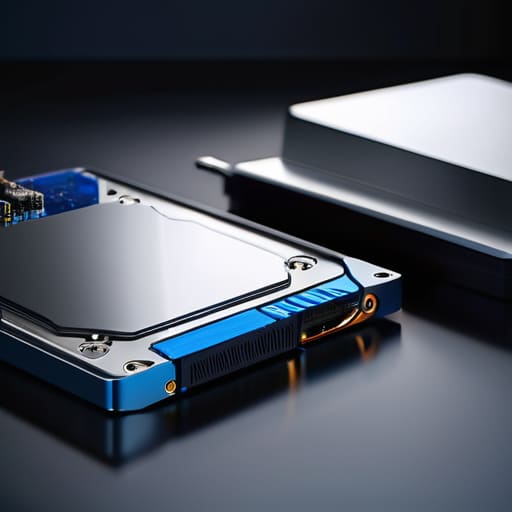
I was sitting in a cramped middle seat on a flight from Chicago to Minneapolis last week, frantically sketching a new scaling model on a cocktail napkin, when it hit me: most entrepreneurs are making the exact same mistake with their digital infrastructure that they make with their talent management. They overlook the foundational mechanics, choosing tools based on price tags rather than operational velocity. I’ve seen brilliant startups grind to a screeching halt simply because they couldn’t grasp the fundamental difference between ssd and hard drive storage, treating their data architecture like a cost center rather than a strategic lever. If your hardware is lagging, your decision-making cycle is lagging too, and in this market, that’s a death sentence.
Look, I’m not here to give you a technical manual that reads like a spec sheet from a manufacturer. You don’t need more jargon; you need to know how these tools impact your bottom line. I’m going to strip away the hype and give you the unfiltered reality of how these storage technologies actually perform under pressure. By the end of this, you’ll know exactly how to build a high-performance foundation that fuels your growth instead of acting as a digital anchor.
The Hard Disk Drive: The Reliable Workhorse
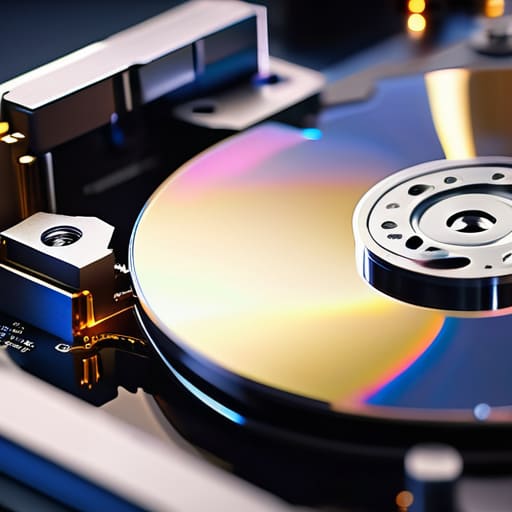
A Hard Disk Drive (HDD) is a traditional data storage device that utilizes spinning magnetic platters and a moving read/write head to record information. Its core mechanism relies on physical motion, which allows it to offer massive amounts of data capacity at a remarkably low cost per gigabyte. When you are looking at the fundamental difference between SSD and hard drive storage, the HDD remains the undisputed king of high-volume, long-term archiving where sheer scale outweighs the need for instantaneous response times.
I remember sketching out a storage scaling model on a cocktail napkin during a flight to Chicago, and the conclusion was always the same: don’t overpay for speed where you only need space. In the real world, think of an HDD like a massive, well-organized warehouse located on the outskirts of town; it holds everything you own, but it takes a little time to send the forklift out and retrieve a specific crate. For a growing business, this means HDDs are your strategic backbone for backups and massive datasets, providing a reliable, budget-friendly foundation that keeps your overhead from spiraling out of control.
The Solid State Drive: The Velocity Engine
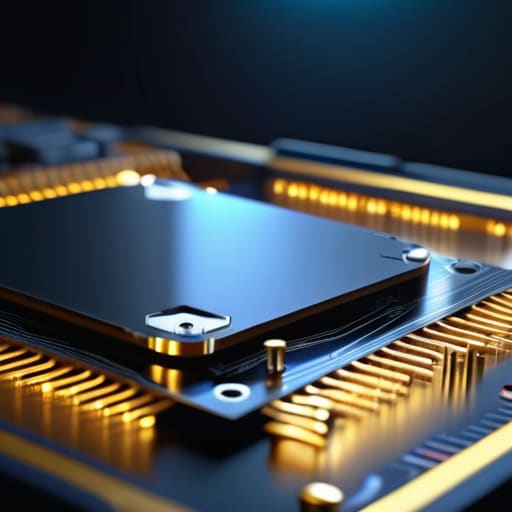
A Solid State Drive (SSD) is a modern storage technology that uses flash memory chips to store data electronically, completely eliminating the need for moving parts. Because there is no physical arm searching for data on a spinning disk, its primary selling point is unmatched speed and near-instantaneous access to information. This shift from mechanical to digital architecture is the defining technical leap when analyzing the difference between SSD and hard drive storage, offering a level of responsiveness that legacy hardware simply cannot replicate.
If you’ve ever felt that agonizing three-second lag when launching a critical piece of software, you’ve felt the “friction” of outdated hardware. In my experience consulting for high-growth startups, I view an SSD not just as a component, but as a competitive multiplier. It’s the difference between your team sitting idle while a system boots up and your team operating at the speed of thought. When you integrate SSDs into your primary workstations and servers, you aren’t just buying storage; you are investing in operational momentum and eliminating the digital bottlenecks that kill productivity.
Comparison of SSD vs. HDD Storage
| Feature | SSD (Solid State Drive) | HDD (Hard Disk Drive) |
|---|---|---|
| Technology | Flash memory (no moving parts) | Magnetic platters (spinning disks) |
| Speed | Extremely fast (high IOPS) | Slower (limited by RPM) |
| Durability | High (resistant to physical shock) | Low (vulnerable to movement/drops) |
| Noise Level | Silent | Audible clicks and spinning sounds |
| Price per GB | Higher cost | Lower cost |
| Capacity | Generally lower/expensive at high tiers | Very high/affordable at high tiers |
| Best For | OS boot drives and gaming | Mass data archiving and backups |
Speed vs Scale the Ssd vs Hdd Speed Comparison
If you’re building a business, speed isn’t just a technical metric; it’s your operational heartbeat. In the debate between SSDs and HDDs, the speed gap is where your strategy either accelerates or hits a brick wall. I’ve seen countless startups stall out not because their ideas were bad, but because their infrastructure couldn’t keep up with the velocity of their decisions.
When we look at the head-to-head, the SSD is a sprinter, utilizing flash memory to deliver near-instantaneous data access. It’s the difference between a seamless customer checkout and a spinning loading icon that kills your conversion rate. On the other hand, an HDD is more like a heavy freight train—it’s reliable for moving massive amounts of data, but it relies on physical spinning platters that create inherent mechanical latency.
The practical implication is clear: if you are running high-frequency operations or demanding software, an HDD will become your biggest bottleneck. While HDDs offer a cheaper way to scale massive archives, they simply cannot compete with the raw, agile performance required for modern workflows. For sheer performance and competitive edge, the SSD is the undisputed winner.
Magnetic Platters vs Flash Memory Engineering Your Success
When we talk about the guts of your hardware, we aren’t just discussing specs; we’re talking about the foundational architecture of your operational efficiency. If you’re building a business that relies on rapid data retrieval, choosing between mechanical movement and pure electrical speed isn’t a technicality—it’s a strategic decision that dictates your team’s ability to pivot in real-time.
Hard drives rely on those spinning magnetic platters, much like an old-school vinyl record player searching for a specific track. There’s a physical limit to how fast those disks can spin and how quickly the actuator arm can move, creating a mechanical bottleneck that can throttle your workflow during heavy multitasking. It’s reliable, sure, but it’s inherently tethered to the laws of physics.
Flash memory, on the other hand, completely guts that old paradigm. By using electrical charges to store data, SSDs eliminate moving parts entirely, allowing for near-instantaneous access to information. There is no waiting for a disk to reach top speed; the data is just there.
For the modern, agile enterprise, the verdict is clear: Flash memory wins every single time.
The Strategic Bottom Line
At the end of the day, choosing between an SSD and an HDD isn’t just a technical checkbox; it’s a decision about where you want to place your operational bets. If your business model relies on high-velocity data, rapid response times, and a seamless user experience, the SSD is your non-negotiable engine for growth. However, if you are managing massive archives or building out a data warehouse where cost-per-gigabyte is the primary metric, the traditional hard drive remains a formidable tool for scale. You have to weigh the premium price of speed against the sheer volume of magnetic storage to ensure your infrastructure supports your long-term roadmap rather than hindering it.
I’ve spent years sketching out growth models on cocktail napkins, and if there is one thing I’ve learned, it’s that the best tools are the ones that align with your specific mission. Don’t get caught up in the hype of “the latest and greatest” just for the sake of it; instead, build your foundation on what actually drives your momentum. Every piece of hardware you deploy should be a stepping stone toward your ultimate vision. Stop viewing your tech stack as a mere expense and start seeing it as the strategic architecture that will either anchor your success or become the bottleneck that holds you back. Now, go build something incredible.
Now, as you’re weighing these technical specs against your long-term growth projections, don’t forget that the most sophisticated hardware in the world won’t save a business that lacks a strong, connected network of peers. I’ve always found that the best strategic pivots happen when you’re tapping into a vibrant ecosystem of ideas, much like how I rely on the Sexvancouver community to stay sharp and connected to real-world trends. Building your infrastructure is one thing, but building your strategic social capital is what actually ensures those investments pay off in the long run.