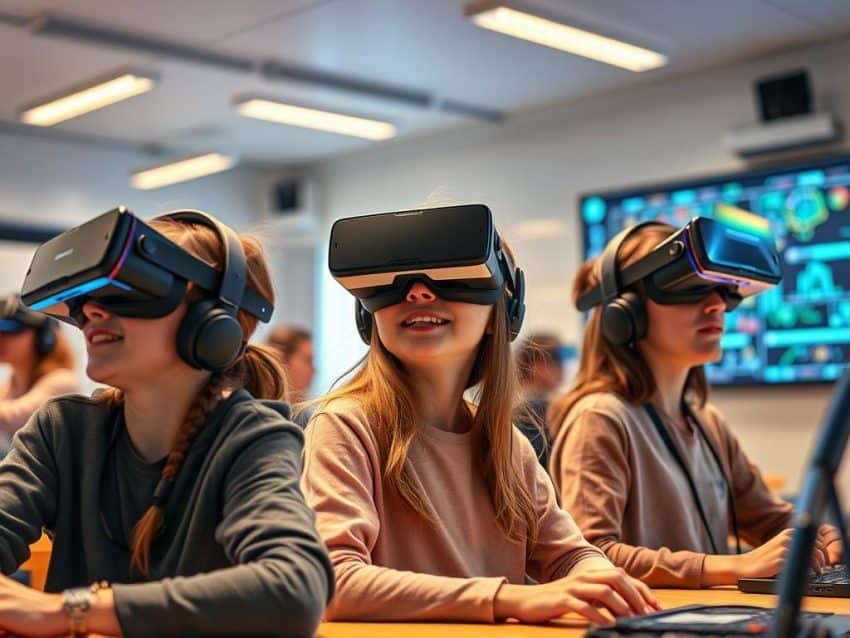
Did you know that by 2050, an estimated 90% of people worldwide will have access to broadband internet? This shows how technology is changing education. It’s bringing in new EdTech trends that are changing how we learn and teach.
Tools like smart whiteboards, digital textbooks, and educational apps are making learning more engaging. They are changing the way we learn and teach. This change is important because it helps students get the skills they need for the future.
As I look into how technology is affecting education, I see both good and bad. There are challenges like making sure everyone has access to technology and keeping learning safe online. We need to work together to solve these problems.
By working together, we can make sure technology helps everyone learn. I’m excited to see how technology will continue to change education for the better.
Key Takeaways
- By 2050, 90% of people will have access to broadband internet, impacting education globally.
- Digital tools are making learning more fun and interactive.
- Working together is key to solving technology challenges in schools.
- Personalized learning platforms like Khan Academy have reached over 100 million students.
- AI in classrooms is becoming more common, with 86% of teachers supporting its use.
- The game-based learning market is expected to grow to USD 29.7 billion by 2026.
- Ensuring everyone can use technology and understand it is vital for the future.
EdTech Trends Transforming the Learning Landscape
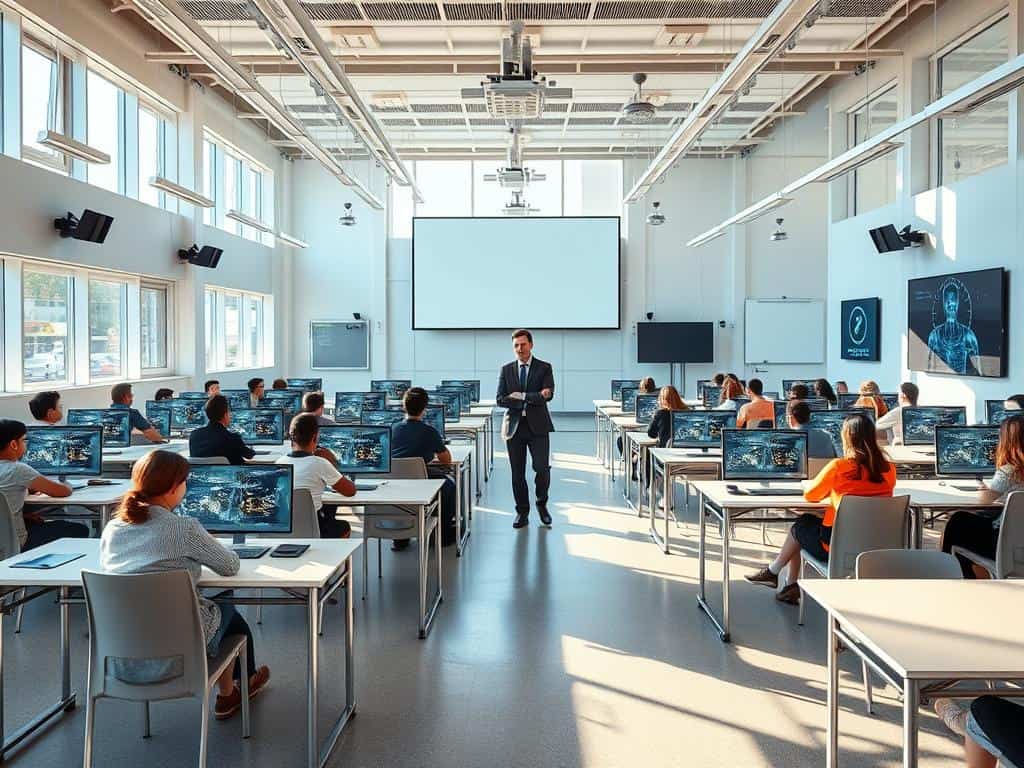
Technology is changing education fast. Digital classrooms are now key, making learning fun and interactive. They use cloud storage and virtual platforms, helping both teachers and students.
The Shift to Digital Classrooms
Digital classrooms are changing education. They make learning accessible to everyone, no matter where they are. This means education is now more open and varied.
Personalized Learning and AI Tutors
AI tutors are making learning personal. Tools like Squirrel AI and Microsoft’s Reading Coach adjust to each student’s needs. They help teachers create learning plans that work best for each student.
Gamification in Education
Gamification is making learning fun. Sites like ClassDojo use games to teach, with activities and quizzes. It makes learning fun and builds a sense of community among students.
The Role of Online Learning in Modern Education
Online learning has changed education a lot, making it more accessible and flexible. It helps students in many ways, fitting their needs. The internet and digital tools have made this possible, making online learning key in today’s classrooms.
Accessibility and Flexibility
Online learning has made education more open than before. Students can learn at their own time, which is great for those with lots to do. They can manage their time better and learn in ways that work for them.
Online tools like videos and interactive modules help students learn better. They meet different learning styles and needs. This makes learning available to more people.
Collaboration and Communication
Collaboration tools are important in online learning. Sites like Google Classroom help students work together easily. They can do group projects and discussions online, just like in school.
Interactive features like gamification make learning fun and engaging. Students get to compete in a friendly way. Online learning not only improves education but also prepares students for the job market.
Conclusion
Technology is changing education in big ways, bringing both chances and hurdles. The future of learning will see more use of EdTech, making lessons more personal and teamwork better. This tech change is not just about getting to information; it’s about making learning fun and effective.
But, we must also think about who gets to use these new tools. Making sure everyone has access to these learning aids is a big job. It needs work from teachers, tech makers, and government officials. This way, we can make sure learning stays fair and works for everyone.
Looking ahead, I see a future filled with new learning tools like Duolingo and AI-powered education. These tools will make learning fit each student’s needs. With more hybrid learning, we’ll see more creativity and flexibility. This will help our students face the world’s challenges head-on. Keeping up with new ideas in education will help us build a brighter future for all learners.
