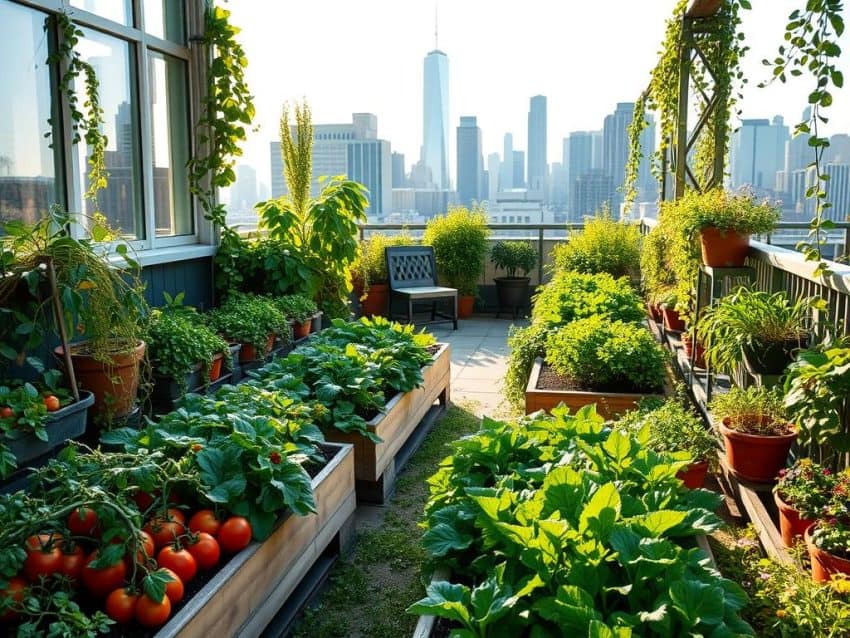
Did you know over 80% of city folks think they can’t grow their own food because of space? But, even the smallest balcony or windowsill can be a garden. Urban gardening is more than a trend; it’s a way to live sustainably and improve our homes. I used to think starting a garden was too hard, but I found out it’s not.
I learned to grow herbs, veggies, and more in tiny spaces. This includes using containers and vertical gardens. It’s amazing how much you can do with a little creativity.
In this guide, I’ll share tips for gardening in small spaces. You can garden on a sunny windowsill, a rooftop, or even a community plot. We’ll explore all the options and learn how to garden sustainably, even with limited space.
Key Takeaways
- Utilize vertical space effectively with plants like ivy and cucumbers.
- Keep proper spacing between plants to ensure healthy growth.
- Use crushed eggshells as a natural source of calcium for your plants.
- Container gardening is ideal for herbs and vegetables on patios or decks.
- Rooftop gardens can support sun-loving vegetables with the right setup.
- Community gardens provide opportunities for growing food in limited spaces.
Understanding Your Space Limitations
Knowing my gardening space is key to success in urban gardening. A sunlight assessment helps me see how much light my plants get. I place full-sun plants in the brightest spots and shade lovers like kale in the shade.
Assessing Sunlight and Environmental Factors
When I look at my space, I watch for things that affect plants. Wind and temperature changes can be tough. So, I pick the best spots for my garden based on sunlight.
Identifying Available Growing Locations
In my 40-foot by 100-foot lot, I got creative with space. I took out the lawn for more plants and used containers for soil and water issues. Elevated containers make paths interesting, and a small shed shows function in small spaces.
Vertical gardening, like trellises and hanging planters, makes the most of space. It’s great for plants like tomatoes and climbing hydrangeas.
Gardening Tips for Minimal Space
Gardening in small spaces can be a challenge, but it’s also fun. There are many ways to make your garden vibrant, even if it’s tiny. Using containers and vertical gardening are smart ways to grow more in less space.
Utilizing Containers and Vertical Space
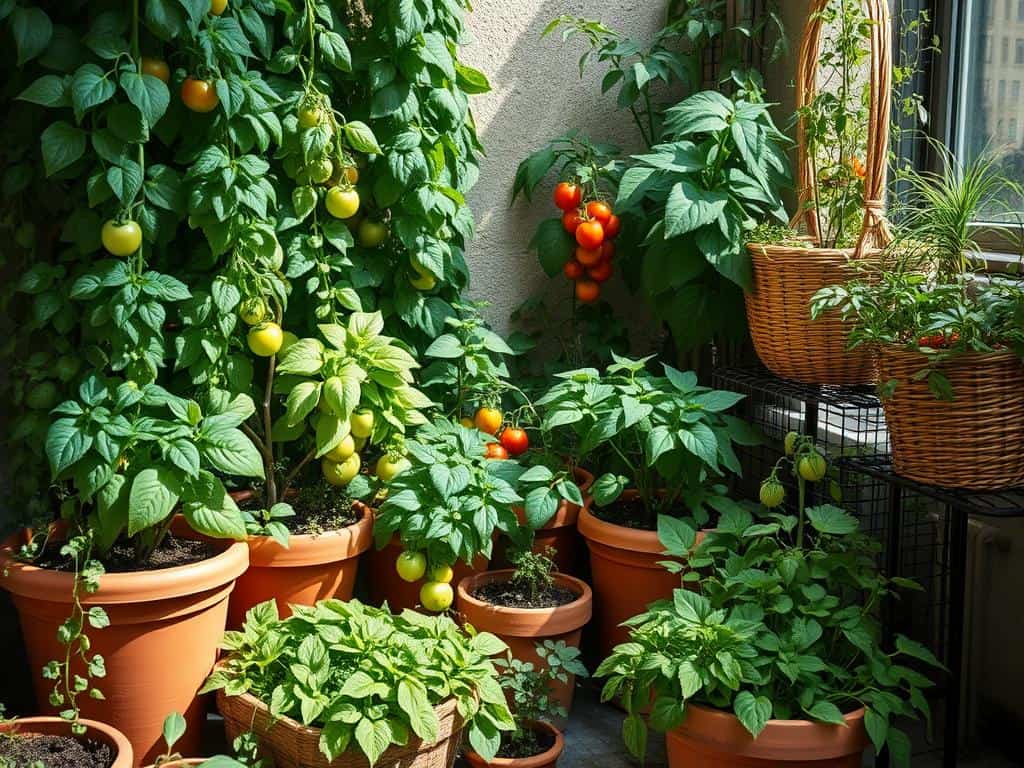
Container gardening lets you grow plants in old pots, buckets, or even furniture. I place these containers around my garden to save space and manage soil and water. Raised beds also help, giving me ten times more yield than regular planting.
Vertical gardening is a big help, using trellises, fences, and wall planters. Plants like tomatoes, cucumbers, and peas grow well up high, saving ground space. Adding small structures like a shed or seating area makes my garden feel bigger and more organized.
Smart Plant Choices for Small Gardens
Choosing the right plants is key in small gardens. I grow herbs, leafy greens, and bush beans because they need less space. Pairing plants with similar needs helps use space better. For example, I plant bush beans with beets to make the most of my space.
Succession planting keeps my garden always growing. I have seedlings ready to go in after I harvest, keeping my garden productive all season. Even in partial shade, plants like Alpine strawberries do well in containers. These tips show how to make a beautiful garden, even in a small space.
Community and Resource Sharing in Urban Gardening
Local gardening shows the power of community and sharing. Neighbors exchange tools, seeds, and knowledge. This teamwork strengthens bonds and boosts gardening success.
Renting Community Garden Plots
Many cities let people rent garden plots for a small fee. This opens up new gardening possibilities. I get quality soil and sunlight, and meet other garden lovers.
Universities and gardening stores help find these plots. They make it easy to find the perfect spot for my plants.
Collaborating with Neighbors
Working with neighbors makes gardening better. We share ideas and resources. This makes our community garden more lively.
We hold meetings and post flyers to get more people involved. Even small workshops help. We share everything, from materials to gardening tips.
Conclusion
Starting a garden without much space is possible with good planning and community help. Urban gardening is rewarding and good for the planet if we use our surroundings wisely. By choosing plants that don’t get sick and keeping our gardens clean, we can grow food even in tiny spots.
Working with other gardeners makes our hobby even better. We share tips and resources, building a community that supports our green goals. By using every inch, like community plots and containers, we can grow more food in less space.
Nurturing plants brings us joy and helps our community become stronger. As I keep gardening in the city, I look forward to growing my own food and helping the planet. So, start small, be flexible, and enjoy the journey of gardening!
