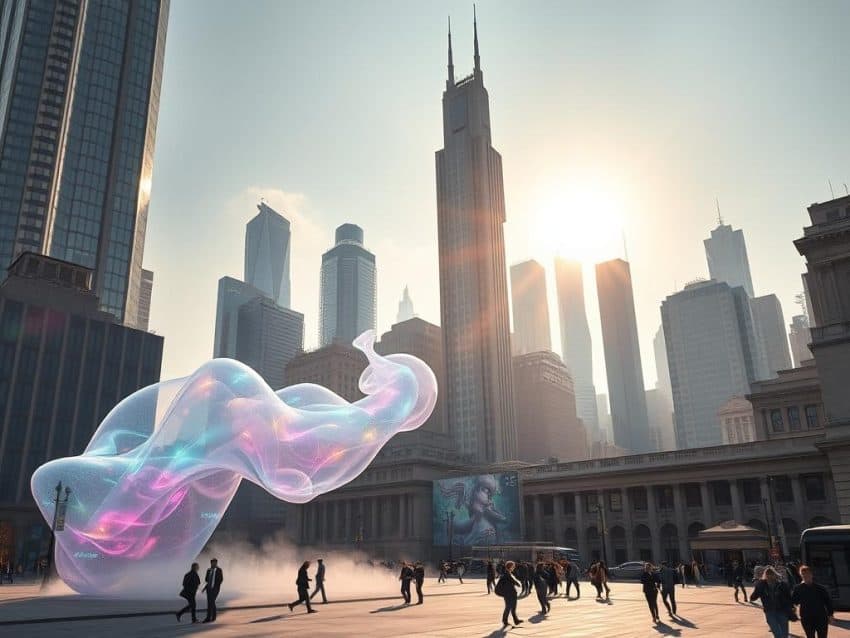
Did you know Ai-Da, the world’s first humanoid robot artist, creates unique artworks? She uses her own cameras and algorithms. Her results show how far technology has come, making us question what creativity means today.
Tools like DALL-E, Midjourney, and Stable Diffusion are changing digital art. They are also changing how we think about personal creativity. This is a big deal in our fast-changing world of art.
Art and technology are coming together in new ways. This mix is bringing out creative ideas we never thought of before. It’s making us rethink what creativity really is.
As I dive into this world, I’m thinking a lot about big questions. Questions like who owns the art and what makes it original? Will AI help us create, or will it cause problems with who gets credit? Let’s explore how AI is shaping our future of creativity together.

Key Takeaways
- AI-generated art is transforming the landscape of creativity, giving artists new tools.
- Technologies like DALL-E and Midjourney let users make art without needing to know a lot about tech.
- AI’s unique creations are making us rethink what art, creativity, and authorship mean.
- Working with AI might actually make human creativity better, not worse.
- There are big questions about ethics, like using art without permission, in the AI art world.
- The rise of AI art galleries and shows is a big step for the art world.
Understanding AI-Generated Art
AI-generated art is changing the art world. It uses advanced tech to make stunning pieces. These creations often mix human creativity with machine learning.
As someone who loves this field, I find it exciting. Exploring how it works and what it means is fascinating.
What is AI-Generated Art?
AI-generated art is made by creative algorithms that look at lots of images. Artists use tools like Midjourney, DALL-E, and Stable Diffusion. These tools are trained on millions of images.
The art they make can be very realistic or abstract. This lets artists express themselves in new ways.
How AI Algorithms Create Art
Creating AI art starts with users giving prompts to the algorithms. This lets them make images in real time. Users can use positive and negative prompts to improve their art.
This makes art-making more accessible. It also shows how machine learning can turn text into beautiful images.
The Role of Deep Learning in Art Creation
Deep learning makes AI art better. It helps the algorithms learn and get better over time. This leads to more detailed and beautiful designs.
This technology makes us think about the future of creativity. Some see it as a challenge to traditional artists. Others see it as a new way to create.
The Impact of AI on Traditional Art Forms
Exploring AI and traditional art shows a big change in how we think about creativity. People used to think only humans could be creative. But now, artists see AI as a partner, opening up new ways to express themselves.
Tools like Google’s DeepDream create unique patterns. These patterns inspire artists, making their paintings even more special. Working with AI, artists come up with ideas they never thought possible before.
Changing Perspectives on Creativity
AI changing art makes us rethink what creativity means. Artists like Emily show how AI can add something new to their work. This mix of old and new styles lets artists try out new things.
But, there’s worry about keeping art real and learning traditional skills. It’s important to use AI wisely. This way, we can keep the deep feelings and beauty of traditional art alive.
Collaboration vs. Competition: Artists and AI
AI in art might make some worry about losing jobs. But, it also brings chances for working together. For example, Jukedeck lets musicians create music while keeping their own style.
But, there are worries about using artists’ work to train AI. This raises questions about who owns the rights to the art. It’s important to make sure artists get paid for their work in this new world.
AI-Generated Art: Ethical Considerations and Controversies
The rise of ethical AI art has sparked a lot of talk about who owns the art and who gets the credit. AI can make amazing pictures, but it raises big questions about who should own them. There are worries about using copyrighted images to train AI and the chance of biased art being made.
It’s key to understand these issues as AI art keeps changing fast.
Intellectual Property Issues in AI Art
One big problem is the unclear rights to AI art. For example, the U.S. Copyright Office says AI can’t own copyrights for its art. This means companies like OpenAI own the rights to images from systems like DALL-E 2. Users own their prompts but not the final art.
This makes old ideas about who owns art seem outdated.
The Debate Over Authorship
Authorship debates get even more complex when we talk about biases in AI art. For example, DALL-E 2 has made pictures that show stereotypes, like women as nurses and men as lawyers. This shows a big worry about how AI shapes our views and changes cultural stories.
With AI art based on old biases, it’s hard to figure out who should be credited.
Case Studies of Controversy in AI Art Exhibitions
There are many examples of AI art causing trouble in galleries and shows. People have been upset by AI art that’s seen as offensive or misleading. For example, deepfakes have made people lose trust in institutions and change their opinions.
This shows we need laws and clear rules to protect artists and make sure AI art is used right.
Conclusion
AI-generated art shows its wide impact on the art world. It mixes technology and creativity in a complex way. Yet, AI’s algorithmic nature has its limits.
AI art often misses the personal touch that humans bring. It’s driven by data, not real insight or intent. This makes it different from art made by humans.
Thinking about AI’s role in art, I wonder if it will help or hinder human artists. AI is precise but lacks the emotions and cultural depth of human art. This debate is key as we figure out how AI and traditional art can work together.
It’s clear we need a good balance between artists and tech experts. They should work together to set the limits of creativity and art. This way, we can create a future where technology and human touch blend well.
